Have you ever read stories about an adult child who felt or, rather, experienced something inexplicably “spiritual” when a parent passed away? I always find those kinds of connections incredibly amazing.
Then it happened to me in 2004.
It was Tuesday, November 9th—a particularly meaningful day for me. After having waited more than a year, my citizenship application was finally approved. I was beyond excited. Along with many others, I was scheduled to attend a citizenship oath ceremony, which took place in downtown San Diego, where parking was bound to be a bit tricky. My husband, Eugene, took the day off and drove me there. He wanted to witness my special moment and celebrate together. He had already gone through the process to become an official citizen, and knew exactly what to do.
The long-anticipated event ended before noon. I was officially an American citizen! Soon, I would receive my new passport with my new legal first name, Lucy. My old Chinese passport was no longer my identity.
We went home, grabbed a quick lunch, and decided to take a much-needed nap before picking up our six-year-old son from school and our baby girl from a friend’s house. We both were out as soon as we hit the pillows!
Perhaps only about half an hour later, around 12:30 pm, I awoke all of a sudden and immediately sat straight up, like I was pulled by an invisible force! My not-so-subtle movement woke up Eugene. “What is the matter?” he asked. “I don’t know why,” I said.
I clearly remember feeling startled and somewhat confused. I had never woken up from a nap like that before, ever! I wondered what happened. I just could not think of a reason.
We picked up the kids and got them home. At around 3 pm in the afternoon, my cell phone rang. It was my older brother’s number. Immediately, I knew something was not right. He had never called me before. It was always me who made the calls, due to the extravagant cost of international calls.
As soon as I answered, my older brother’s grief-stricken crying came through. “Our dad passed away early this morning! We don’t have dad anymore! Now I am a son left without a dad!”
Early morning in China! That was right around the time in California when I sat up abruptly in the middle of my nap! It had to be my dad! As he was dying in my hometown in China, I, his only daughter, somehow felt it from 6400 miles away, across the Pacific Ocean, in San Diego, California! It was so surreal!
So, my 64-year-old father, who would have turned 65 in one week, passed away on the same day I officially became a U.S. citizen. He had died from Chronic Lymphocytic Leukemia (CLL).
In late 2001, at a routine phone call with my parents, my dad told me that during his recent regular checkup, he was told he had an enlarged spleen. The doctor suggested that he visit a more reputable hospital to get a second opinion. Sometime later, when I called them, he told me the bad news: it was CLL. He had only been retired for a year, after working for 40 years.
He had spent most of his working years away from home. He was looking forward to retirement. He had long desired to take my mother to travel across the country, and now he could finally start making those plans.
“It is not acute.” We breathed a sigh of relief when the doctor said CLL could be manageable.
Eugene and I traveled from America in April 2002 with our nearly four-year-old son, Nicholas, to visit him while he was undergoing treatment in the hospital. He was in good spirits and seemed optimistic. After completing his treatment, he returned home.
I remember buying a red, chic jacket for myself. On the last day of our trip, I put it on and showed it to him. He smiled and said, “Look—my daughter looks like a 19-year-old!” It was the first time in my life he ever commented on my appearance. Little did I know then, it would be the last time.
His illness seemed stable for the next year. I had another child, a baby girl in May 2003. I sent my parents pictures of their grandkids. I expected to bring my daughter to China to visit them soon. Unfortunately, he never got to meet his new granddaughter.
His death struck me hard! I became a girl without a dad! Besides, my wish to someday learn more about him—to hear his stories in his own words—was forever dashed.
There was much I didn’t know about him. But here, I wish to write down what I did know.
A filial son and follower of traditions
His name was Guo-Xiang Zhao (赵国祥). He was born on November 24, 1939 (the fifth day of the tenth month in lunar year), as the sixth boy in the family. His 43-year-old father and 42-year-old mother already had five boys. They had hoped very much for a girl.
Nevertheless, my dad was raised learning skills that were, at the time, considered suitable only for girls: spinning cotton yarn, cooking, cleaning, and so on. He had a quarter-sized scar on his wrist, caused by scalding hot porridge that spilled on him during his childhood.
From an early age, however, instead of learning a trade (like carpentry, which two of his older brothers were skilled in) he showed a strong eagerness to attend school, something his parents never did, nor his five brothers before him. Eventually, he convinced his parents to allow him to go to school, where he excelled. To save money and begin working at a younger age, he chose to attend a junior teaching college.
All in all, he was an obedient son. After graduating from junior college, he accepted the marriage his parents had arranged: marrying my mother, a girl four years younger who had never attended school, but whom both my grandparents, especially my grandmothers, believed was a perfect match for my father. They were married in 1962.
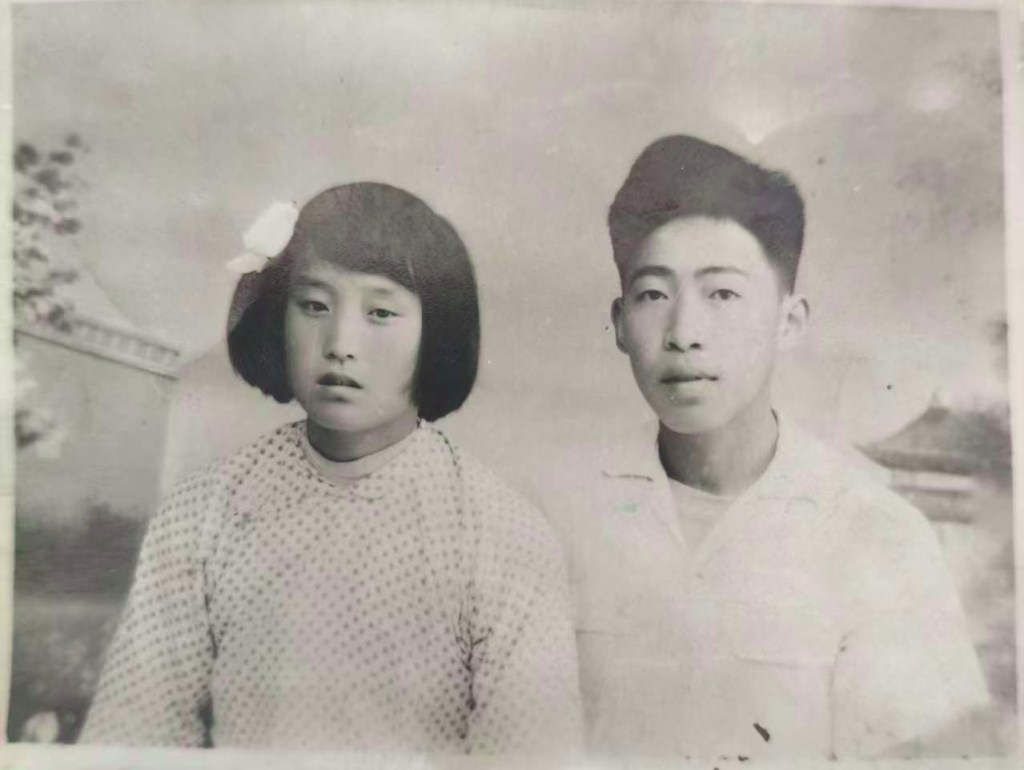
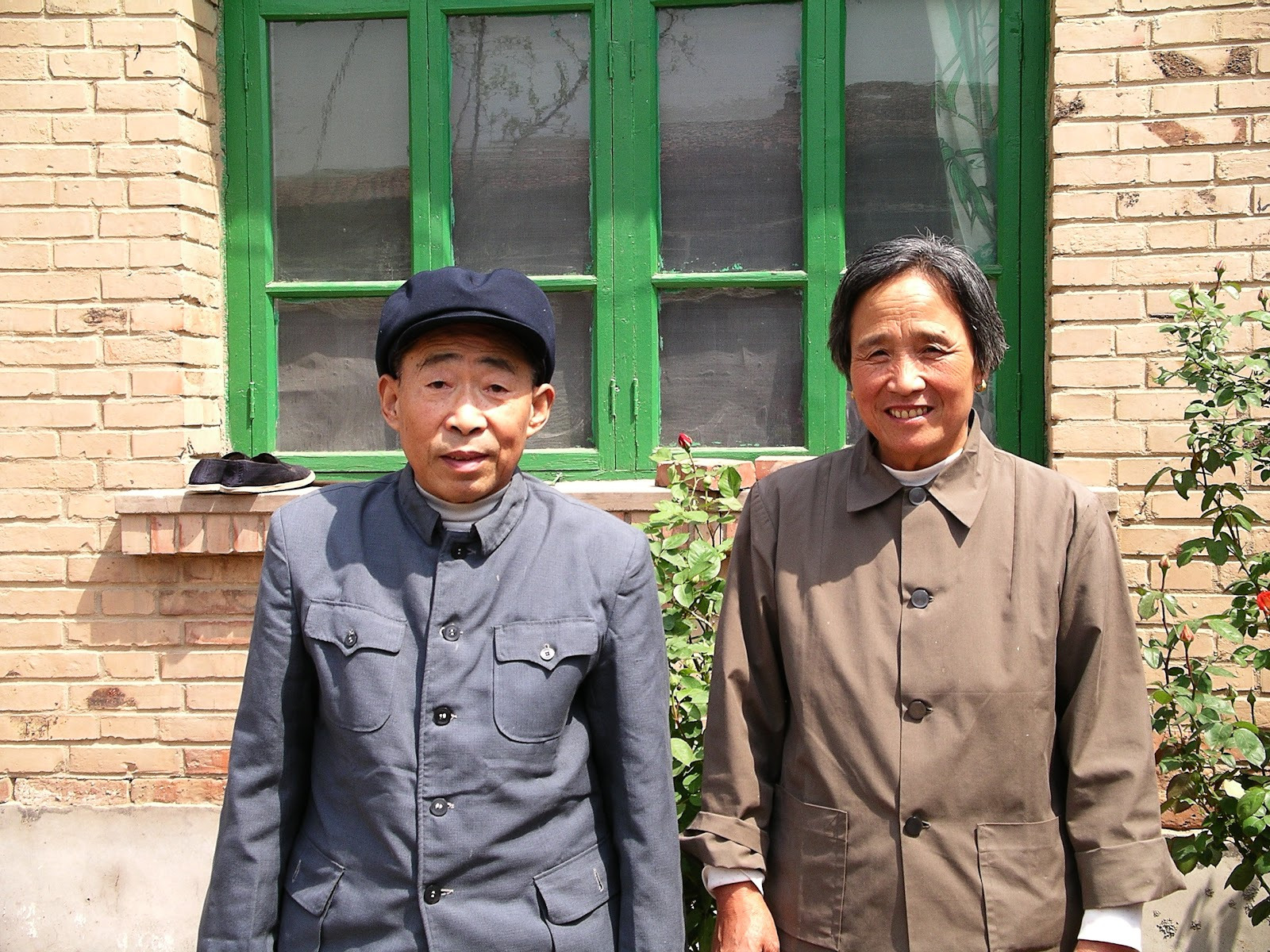
Years later, I remembered my mom saying that my dad may have loved someone else in college, but I never got the chance to ask him.
A loving and yet authoritative father
When I was growing up, my dad didn’t live with my mom and the three of us children in the village. He worked as a middle school, and later high school, teacher in town, as a government employee. He was only allowed to come home on Saturday afternoons, and had to leave on Sunday afternoons. I remember my two brothers and I waiting eagerly at the village entrance, craning our necks to see who would get to see him first. When he arrived, he would dismount his bicycle, greet us with a smile, sometimes pick up my younger brother and hold him in his one hand, and then, almost like magic, reach into his pocket and hand each of us a couple of hard candies. Then he would walk home with us, gently pushing his bike alongside.
When he was home, he would always help my mom with chores: doing laundry, brushing our dirty shoes, and washing our hair.
My father lamented once that none of his children learned to write Chinese characters as beautifully as he did. Because of his long absences, we never really had the chance to learn from him. I remember one time when he sat me on his lap and showed me how to draw a lifelike rabbit in no time.
When we were little, a few days before Chinese New Year, he would take me and my younger brother on his bike to visit the New Year’s market. About four miles away, it was the biggest, most crowded, and yet most festive event we ever went to. There, you could find anything related to Chinese New Year: mouth-watering food, decorations, candies, new clothes, and toys, though mostly we could only entertain our eyes. We looked forward to that day every year.
My dad would have my younger brother sit on the bike bar in front of him. He would start pedaling—slowly at first—so that I could run alongside and jump onto the back seat at just the right moment. At first, I would miss the seat and stumble or fall. Later, I got very good at it and one try was all I needed.
One summer, my little brother and I lived with him for a few weeks. I was around ten years old. His then-students at the junior college, most of them in their early twenties, took turns babysitting us.
During that time, I went to a movie theater for the first time in my life, though I don’t remember anything about the film that was showing. What I do remember is that one of my father’s students, who took us there, showed me the correct way to make a fist to fight back against a bully.
I often felt bad for my older brother. He couldn’t come along on the bike rides to the New Year’s market or stay at Dad’s workplace with us. There was only room for two children on the bike and, anyway, perhaps Dad also made special time to be with him alone.
Growing up, I felt deeply loved and protected by my parents. I knew my father was extremely frugal with himself. At the time, wearing a wristwatch was a symbol of status and fashion, and most teachers owned one. Yet my father did not have a watch until I was in high school. He saved every way he could for us, as he was the sole breadwinner for our family of five.
Despite this, I did not have many conversations with him, nor did I feel he held specific expectations for me. I did sense, however, that he expected my older brother to do well in school. Unlike me, my brother was enrolled in school at the proper age of seven. I had to ask my parents for permission to start school after I had already passed that age. My father also tried to tutor my brother and, at times, spanked him repeatedly for his not-so-good grades and his inattentiveness.
This difference was likely because I was a girl. According to tradition, without exception in my village or my extended family, my path was predetermined: I would be married off in an arranged marriage, live in a rural village away from home, bear children who carried another family’s surname, and serve that family for the rest of my life.
One common type of arranged marriage for young women was exchange marriage. My own beloved little aunt (Xiǎoyí; 小姨) was married off this way when she was very young, so that her oldest brother could marry her new husband’s sister. I was ten years old when that happened. I was sitting next to her when I saw my 22-year-old aunt sob uncontrollably, tears rolling down her cheeks. She did not want the marriage, but she had to obey her mother. I hated what happened to her. (I will write more about this in another blog post.)
When I was in high school, I learned that several of my childhood friends—girls I used to go to school with—had become engaged in exchange marriages. They were at least a year older than me (I was almost always the youngest in my class throughout high school). There was nothing they could do but acquiesce. I was furious when I heard about what was happening to my friends.
I clearly remember one time when, while making dumplings with my parents, I declared that these exchange marriages were horrible! They were just so unfair to my friends. I said that, if it were me, I would never agree to such a thing. My mother said nothing, but my father interrupted and scolded me: “Never say such things outside this house, or you’ll get yourself in trouble!”
Nevertheless, like my mother, he adamantly supported my continued education. Most girls in the village never finished grade school as their families wanted them to help out with household chores instead. The majority of people in rural villages like mine still believed that “uneducated or untalented women are virtuous” (“女人无才便是德”). Girls were raised to become other people’s wives, and investing anything valuable in them was considered pointless.
His own mom, who had spent her entire life walking swayingly on a tiny pair of bound “lotus” feet, was an especially staunch believer of this view. On many occasions, when she saw my dad, she would shout at the top of her lungs: “It is time to pull your daughter out of school to have her learn some proper needlework before it is too late.” “What’s the use for her studying? She will be married away anyway!” Her husband would echo her: “She is too much of a tomboy!—It’s just improper for a girl!” All the while, they pointed at me.
My dad just listened and smiled.
In the end, thanks to my parents’ unwavering support and their hope for a better life for me, I was able to focus on my studies. I graduated from our county’s flagship high school where my father was teaching, and became the first woman in my village ever to attend college.
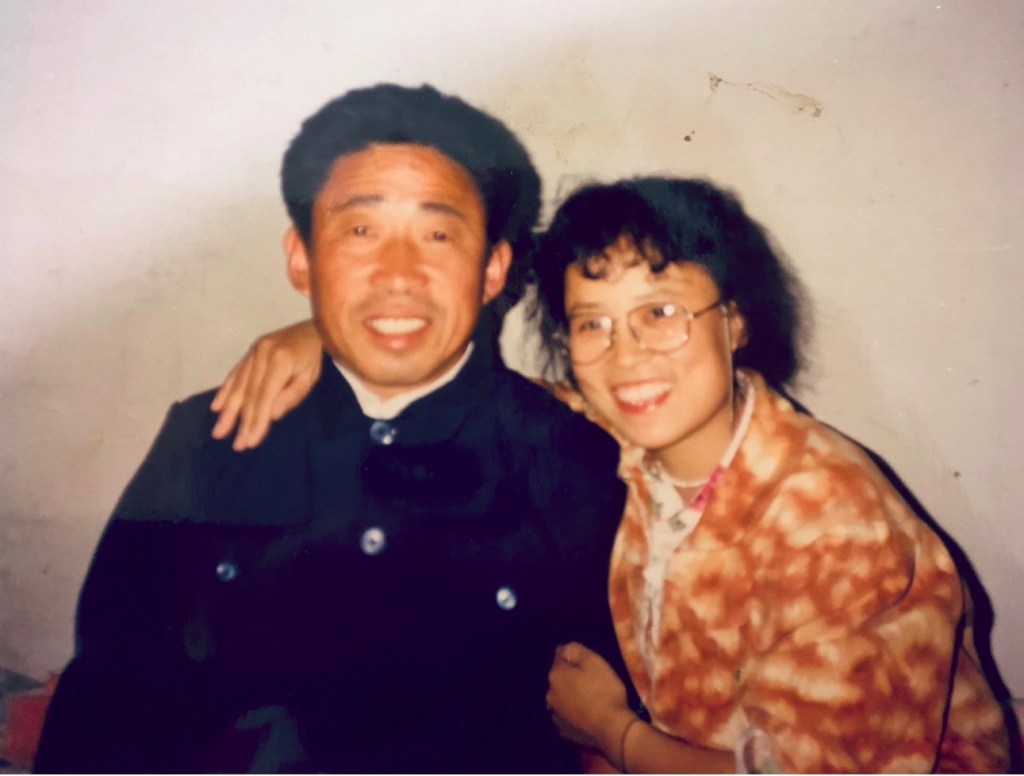
I also made our county’s history by becoming the first women to be admitted to Beijing University (Běijīng dàxué; 北京大学), one of the most prestigious universities. To this day, I remain the only woman ever from my county to attend it.
I have truly made my parents proud.
My grandmother passed away before I took my college entrance exam. My grandfather—the one who had always wished I were more “like a girl”—did get to see me admitted to college. He would even insist: “l always knew that she was smart and would go to college one day.”
Beloved by his students and everyone else
My father was very much respected and trusted by my cousins and uncles. They regularly sought his advice for a wide range of issues. Immediately after retiring, he took the lead in organizing and completing a much-needed update to the family tree booklet (Jiāpǔ; 家谱).
He could read music and write beautiful Chinese calligraphy, something that all of us children did not get to achieve.
Each year, a few days before Chinese New Year, my uncles, students, and neighbors—sometimes even his colleagues—would come to ask him to write auspicious couplets to decorate their doors. My uncles would also send their boys to him for much-needed haircuts. My dad always seemed happy to oblige, and he never minded cleaning up afterward himself.
For his teaching career, my dad worked his way up rather quickly. Although he started off as a grade school teacher, by the time I was in middle school, he was already a teacher of politics and Chinese at the county’s flagship high school. Later, he was selected to serve as a head teacher at the newly established junior college. After the junior college was dissolved two years later, he returned to the high school and served as a homeroom teacher for ten years, where he saw many of his students go on to go to top universities.
Later, he moved closer to my home village and became a superintendent overseeing a group of about twenty schools, including elementary and middle schools.
He was known by many people as “Teacher Zhao” (Zhào lǎoshī; 赵老师), and was loved by many. I loved to ride on the back seat of my father’s bike whenever I could, because it meant I would get a chance to go to exciting places like the New Year’s Market, or the place he worked. However, during each such journey, without exception, someone, often a student or a parent, would recognize him and call out: “Teacher Zhao.” I knew I had to jump off the bike so my dad could talk to them. It was quite normal for me to jump off and back on a number of times. I got quite annoyed by these interruptions!
One night in the late summer of 1977, the weather was still hot and humid. Our family was sitting in the courtyard enjoying the evening breeze when a tall man in his fifties came to visit. He was the man known for having three beautiful daughters. He brought a full basket of fruit from his own field. His youngest daughter had just received news that she had been admitted to a junior college to study law.
At the time, even getting into a junior college was a life-changing event. It meant she would no longer live the life of a rural village girl; a government position would be waiting for her. She would have the chance to choose whom to marry, and her future would be her own.
“She achieved all this thanks to Teacher Zhao,” the man said while literally bowing to my father. A year earlier, he had decided—against his daughter’s will—to make her quit school. After my father learned of her situation, he took the time to visit her parents and persuaded them to allow her to continue her education for another year. Moved by my father’s sincerity, her parents finally relented.
She later became a judge in the county court.
My father’s students went on to be judges, lawyers, high school teachers, and college professors. Many of them would later pay a visit to my father. Years after my dad passed away, my mother still gets visited sometimes by Teacher Zhao’s students.
During my visit to my mother in October 2015, I happened to be invited to my nephew’s (my younger brother’s son’s) engagement dinner, during which the girl’s family patriarch, her grandfather, gave a short speech.
He said that, after learning his granddaughter was dating this young man, he conducted his own investigation. But when he discovered that the boy was a grandson of the late Teacher Zhao, he immediately ended his inquiry.
“That was the end of my investigation. Here I give my full support for them to get married”. The old man said.
My father would have been so pleased. This is yet another example that my father had lived a life not rich in material things, but rich in the lives he touched—this time, that of one of his own grandsons.
There was so much more I wanted to know about my father. For one thing, I wish he got to meet my daughter. I wanted to ask him personal questions: “Dad, was it true that you were in love with someone in college before you were arranged by your parents to marry my mom?” “Were you happy with your life?”
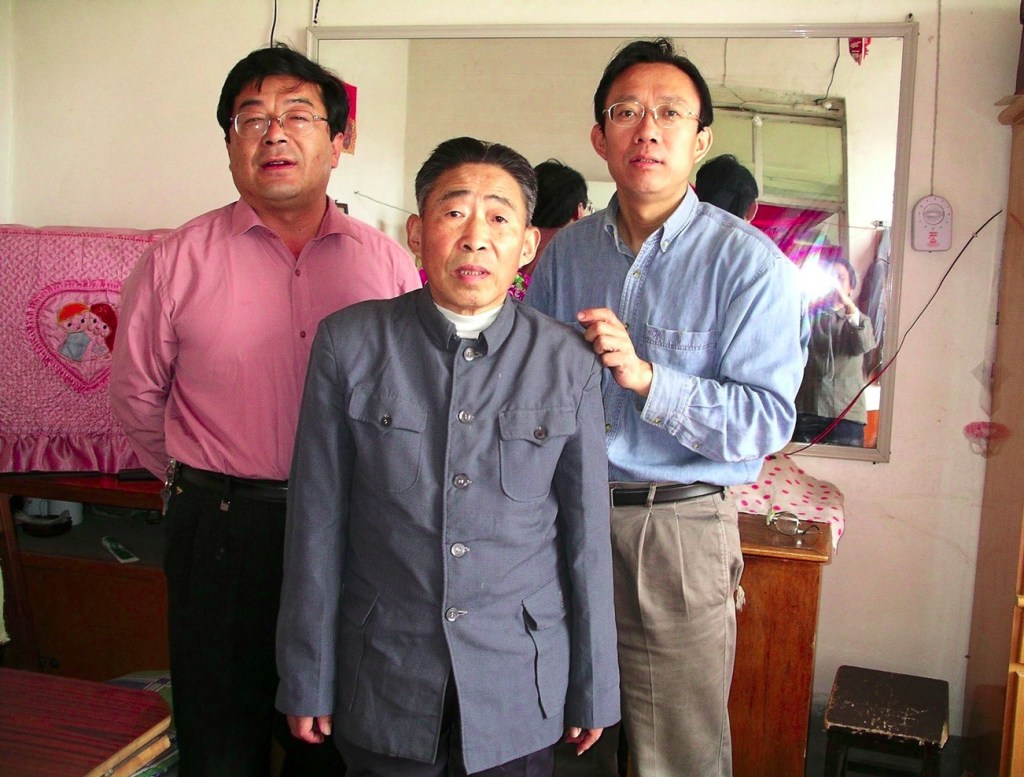
I will never know. Still, I take solace in knowing that in 2000, he boarded a plane—taking my mother with him—for the first time in his life and flew more than 6,000 miles across the ocean to visit me in San Diego, California. It was a journey he was the first, among his friends and colleagues, to make.
He and my mom lived with us for six months, in the same house I still live in today.
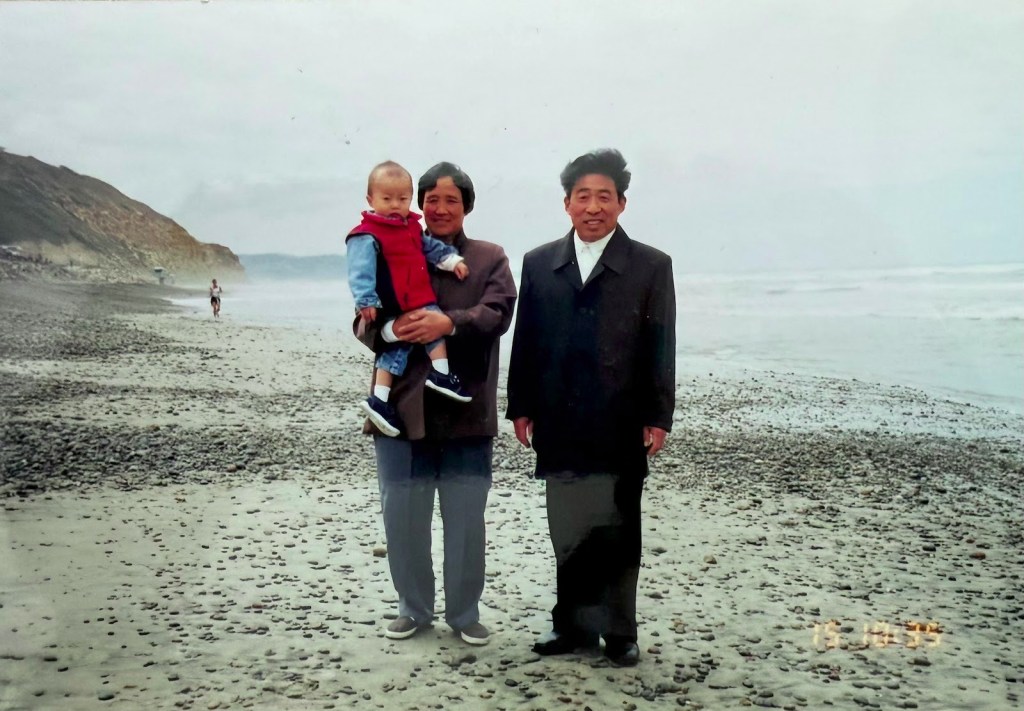
My father never hugged me, nor said “I love you” out loud, but I know for sure that he loved me very much.
December, 2025. In loving memory of my Father.
 我叫小米儿 | My name is Xiaomier.
Leave a comment